
MEET ARTISAN LINKS
Artisan Links is a predominantly women-run business that works to support other women. Each piece of art produced at Artisan Links has a story behind it, always an inspirational one. Meet some of the women responsible for creating our products.
Manifesto
Artisan Links is a socially responsible fair trade business featuring products that contribute to a sustainable future. As the only guaranteed member of the World Fair Trade Organization (WFTO), each product we create is beautifully handcrafted by our team of women-only artisans, comprising of Afghan refugees in Pakistan. Our motto is to be a responsible business, and we empower women in marginalized communities by helping them gain economic security and encouraging them to exploit their artistic expertise.
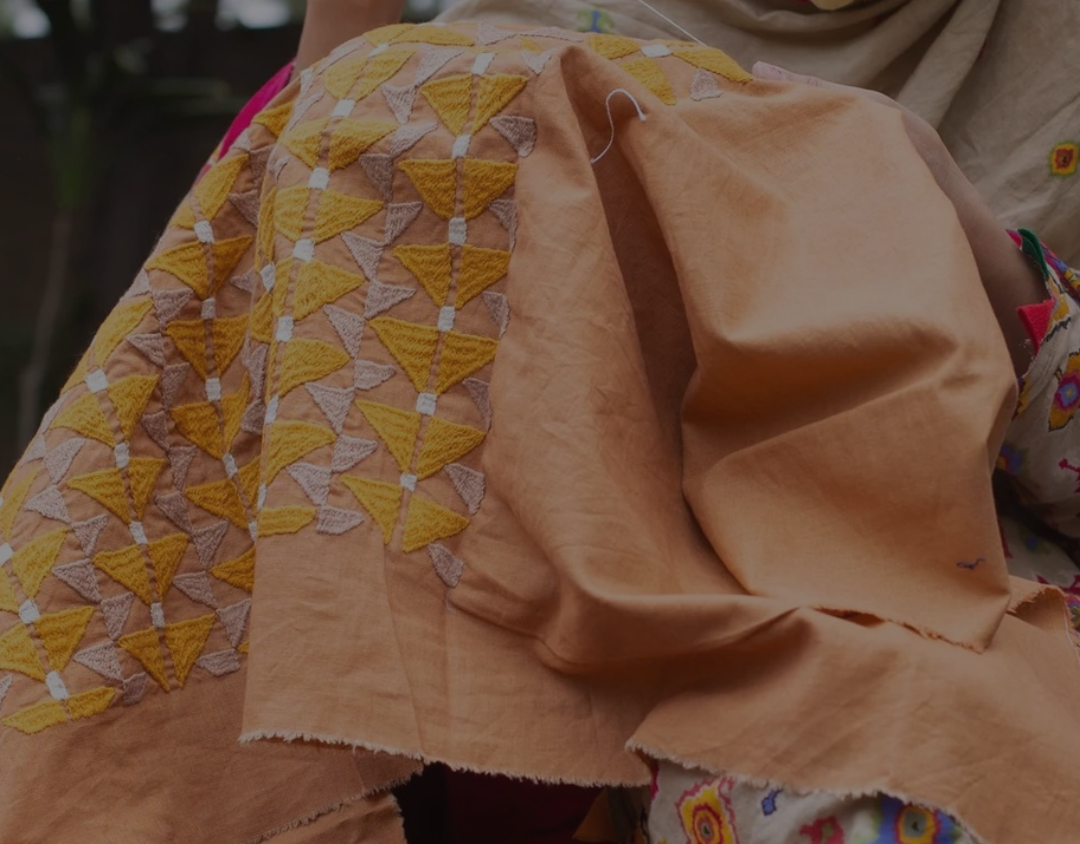
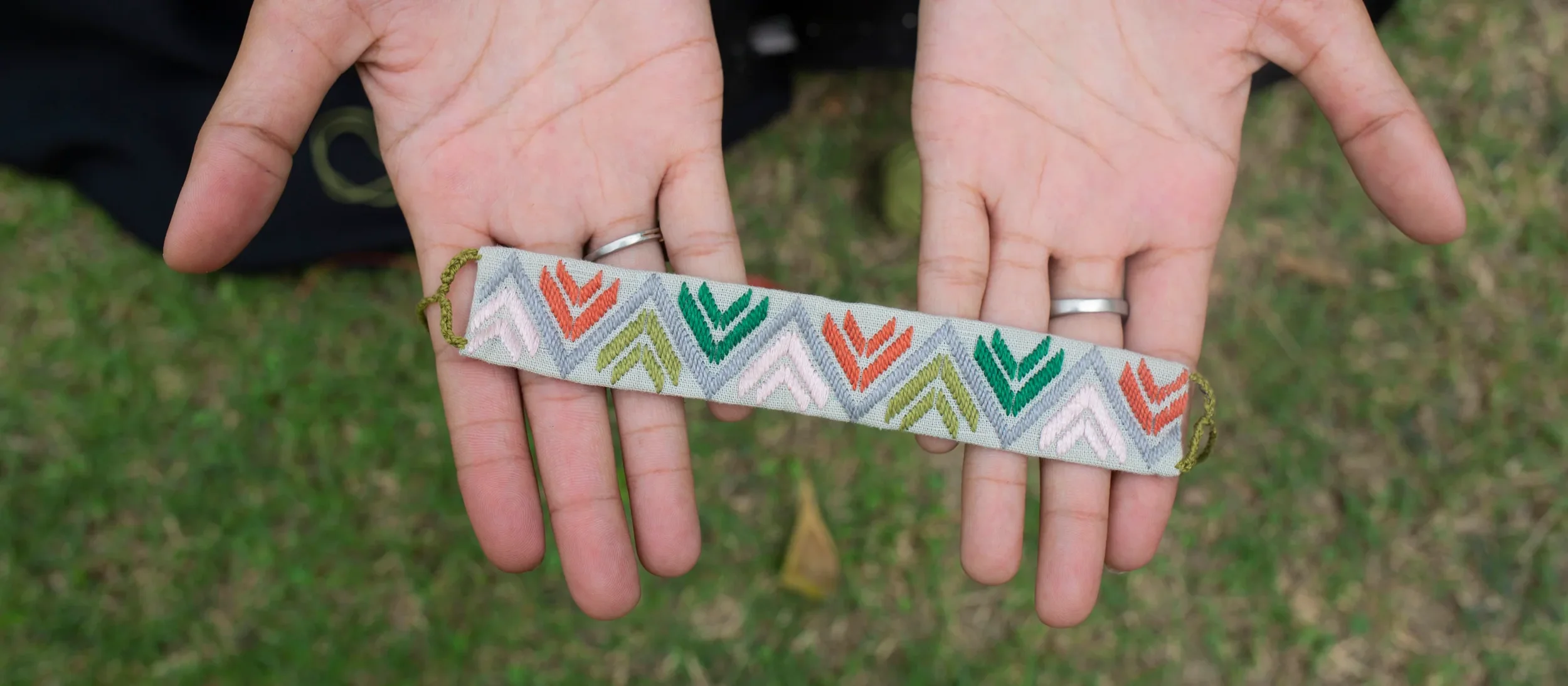
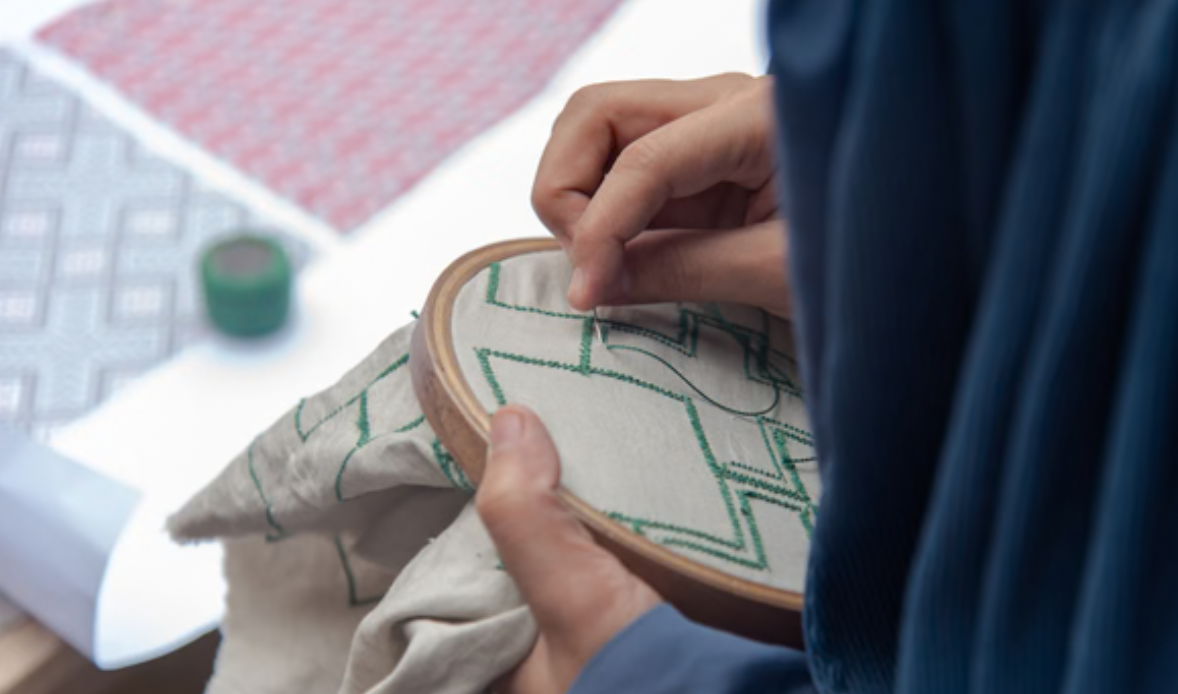
By translating traditional embroidery techniques into contemporary designs, we develop exquisite hand embroidered apparel, home furnishings, gifts, accessories and more. We believe in the importance of cultural preservation, which is why you’ll find that our embroidery makes use of various intricate techniques such as Kandahari, PuktaDozi and more.
Our Mission is to empower the women artists by establishing a sustainable, successful and above all a responsible business.
Our artisans
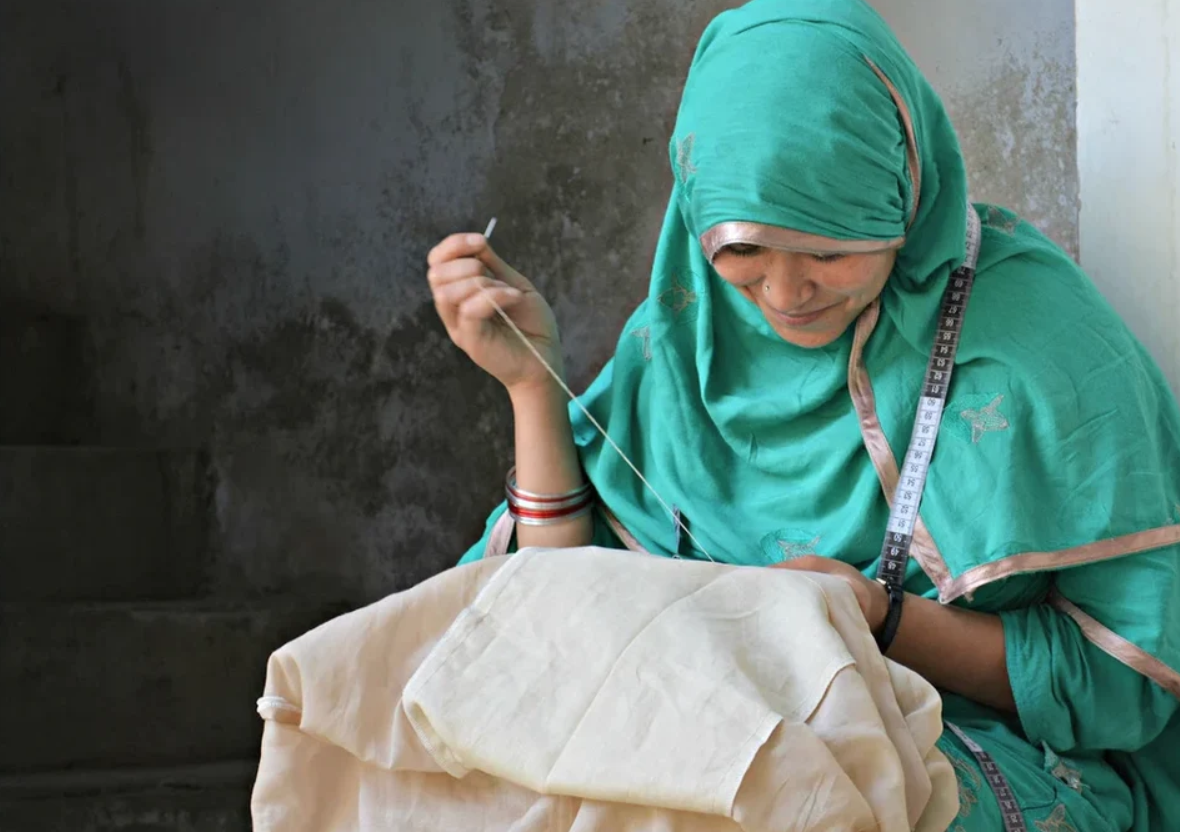
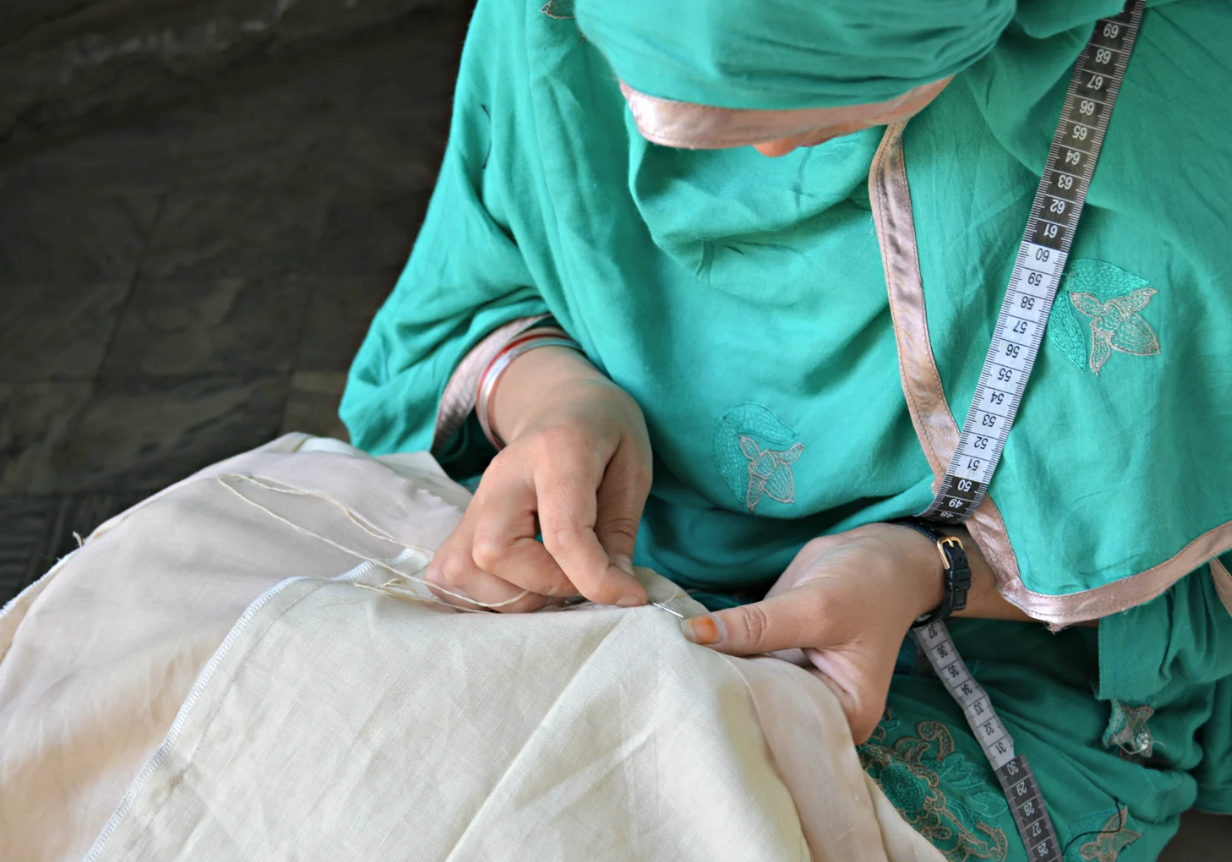
Artisan Links’ strength lies within its workforce, the Artisans. We work with eight hundred and fifty artisans across Pakistan. Each and every one of our products has a story behind it.
Artisan Stories
Zia Gul
Zia Gul has been working with Artisan Links for more than 20 years now. With her exceptional skills, she has been able to train other artisans and has taught them the art to the different types of embroidery and design techniques. Having lost her husband and son, she was the only working member of her family. Artisan Links was her only source of income but with her hard work and dedication, she successfully managed to educate her daughters. Artisan Links attributes its success to women artisans like Zia Gul. Here, at Artisan Links, we facilitate a safe and comfortable working environment for artisans like her to flourish in. Keeping cultural constraints in mind, we want to provide an environment where creativity is not hindered, but one where women are fueled by friendship, growth and innovation.
Razima
To escape the war in 1988, Razima, at the age of fifteen, migrated from Afghanistan to Pakistan. After staying at the Baghicha refugee camp, she later got married to a security guard from a private company. She then settled down in Peshawar and had 9 children. Unfortunately, her husband had an accident which left him paralyzed, and unable to work or earn any income for their family. But Razima, being the brave and respectable woman she is, turned to her embroidery skills to cater to the economic needs of her family, which included her husband’s medical expenses. At Artisan Links, we endorse this sort of behavior. By supporting women artisans, we are inspiring these women to support their own families and earn a livelihood.
Nadia
Nadia, the eldest amongst nine siblings, was born in Afghanistan. As a result of the war, her father lost his business and in 1992, her family had to migrate to Pakistan. They settled down in a refugee camp but unfortunately, they were faced with several problems. Nadia, alone, was left to look after her siblings while her parents worked hard to make ends meet. Due to her additional responsibilities following their migration, she was unable to continue her studies. Moreover, her father ended up contracting a disease which led to Nadia learning sewing and stitching to support her family. But even then, she was unable to enroll her younger sisters in school. However, she began to work at Artisan Links and since then, things took a turn. Being employed at Artisan Links helped her tremendously in meeting her financial obligations, and it encouraged her to further develop her sewing and stitching skills.
Our Mission is to empower the women artists by establishing a sustainable, successful and above all a responsible business.
National Project
We work with eight hundred and fifty artisans across Pakistan, from north to the south of the country. Seventy-five percentage of the artisans are Afghan Refugee women, twenty percent are marginalized Pakistan women and four percent are Afghani living in the bordering town of Jalalabad, Afghanistan. This four percent of women repatriated to Afghanistan many years back but found it hard to find work in their hometown.
Artisan Links from time to time manages to give work to these talented women. They were part of our team while they lived in Pakistan. We find it our moral duty to help them when possible.
Organising The Work
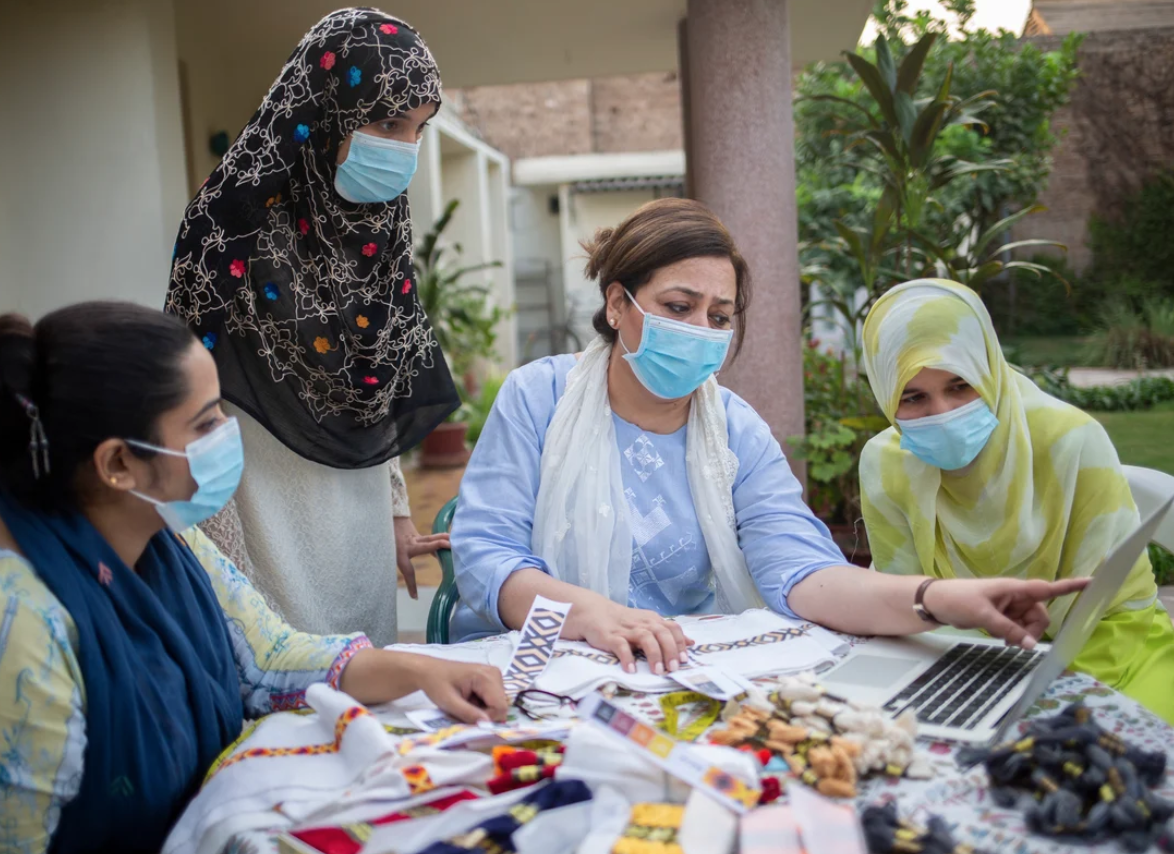
The refugee artists working under the umbrella of Artisan Links mostly reside in the rural areas of Khyber Pakhtunkhwa (KPK) Province, some in Baluchistan Province and few in Sindh Province. Artisan Links manages to deliver work to their doorsteps keeping in mind the difficulties the artist would have to collect work from our head office. Our mobile team of 2 supervisors visit them, distribute work, later collect the pieces and pay them right then and there or we used the local money transfer facility to pay them and use local freight forwarders to deliver and collect pieces.
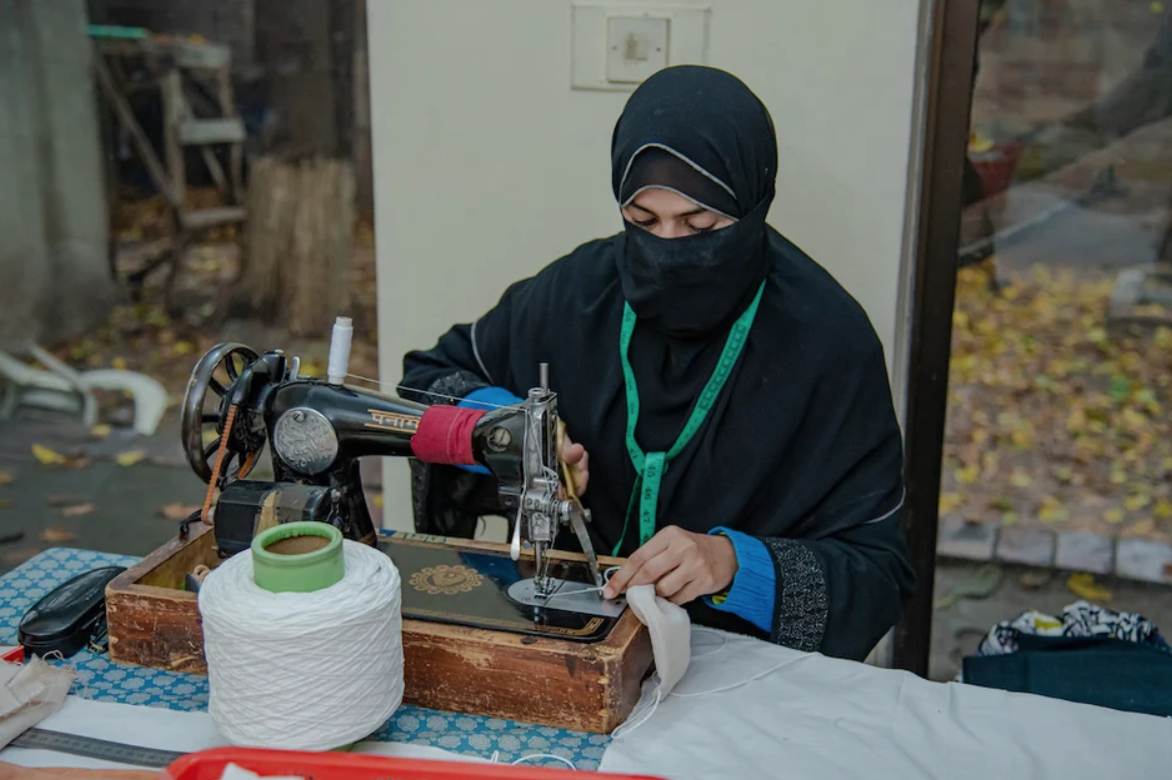
Our Mission is to empower the women artists by establishing a sustainable, successful and above all a responsible business.
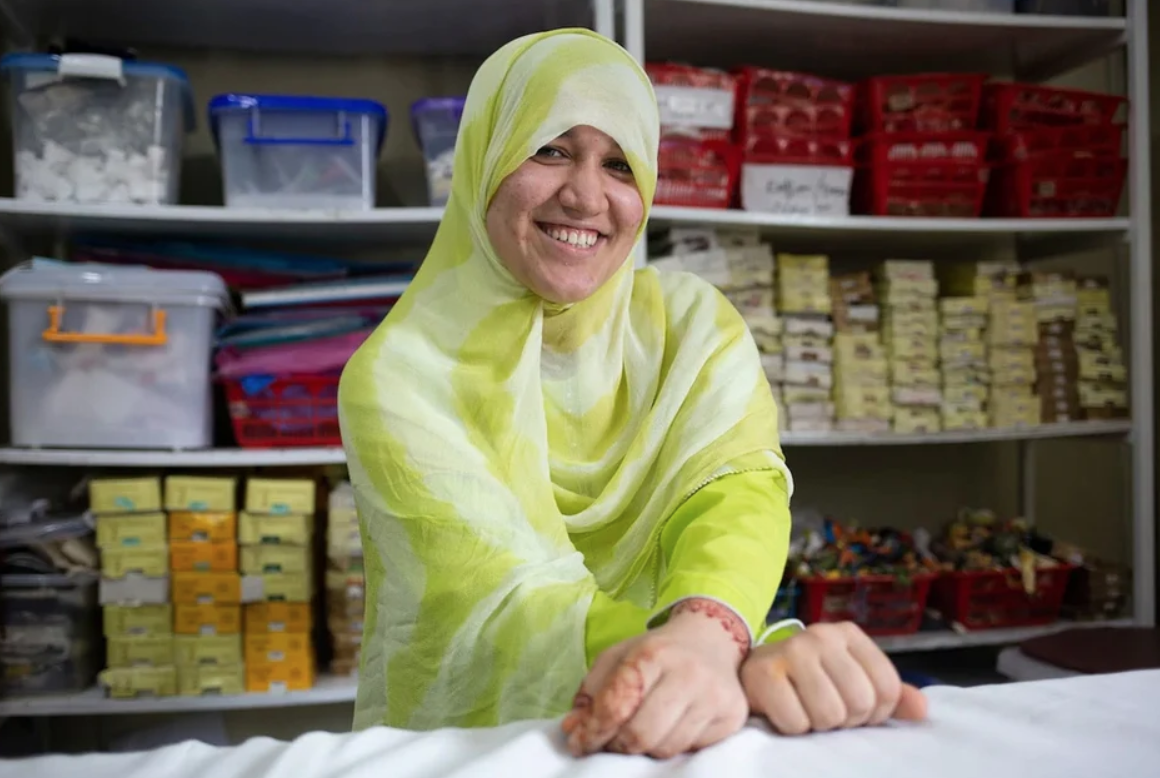
Creating A Better Future
As the only guaranteed member of the World Fair Trade Organization (WFTO), each product we create is beautifully handcrafted by our team of women-only artisans, comprising of Afghan refugees in Pakistan and the local marginalized Pakistani artisans. We empower women in marginalized communities by helping them gain economic security and encouraging them to exploit their artistic expertise.
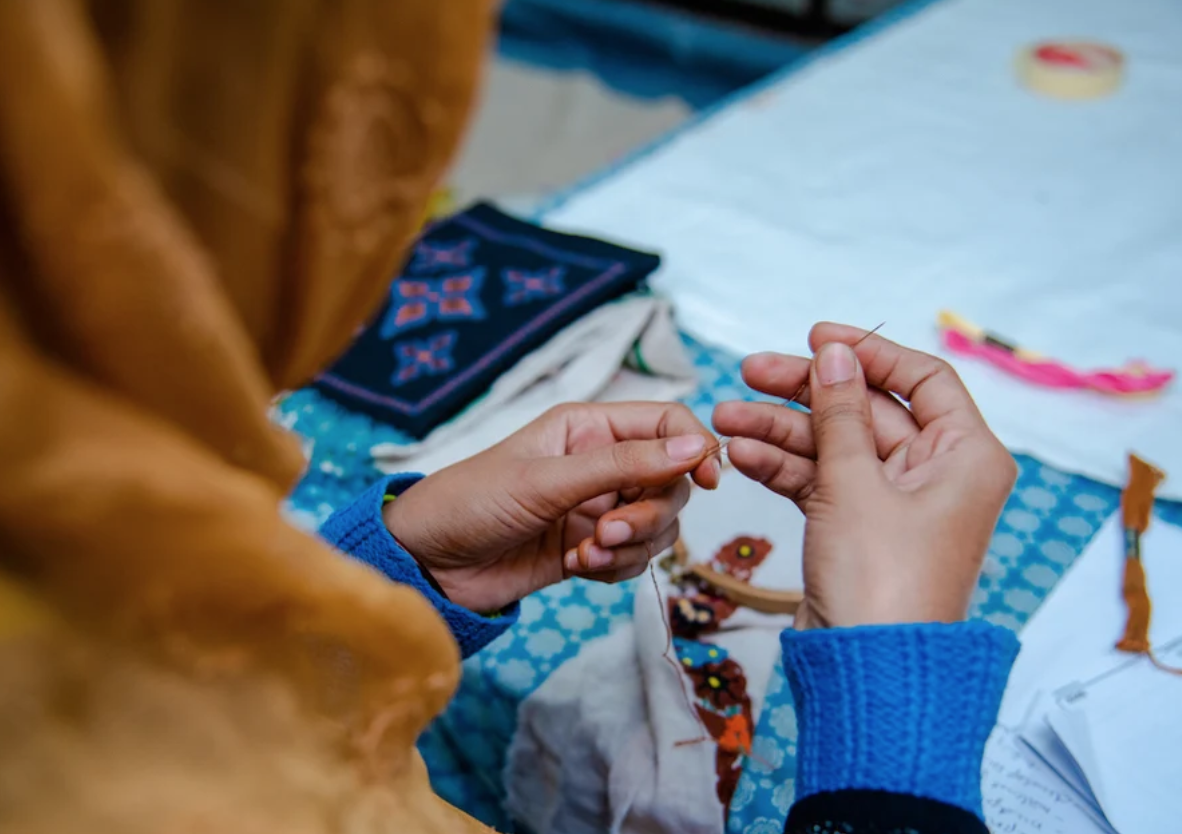
Responsible Production
Artisan Links sells traditional Art of Hand Embroidery.
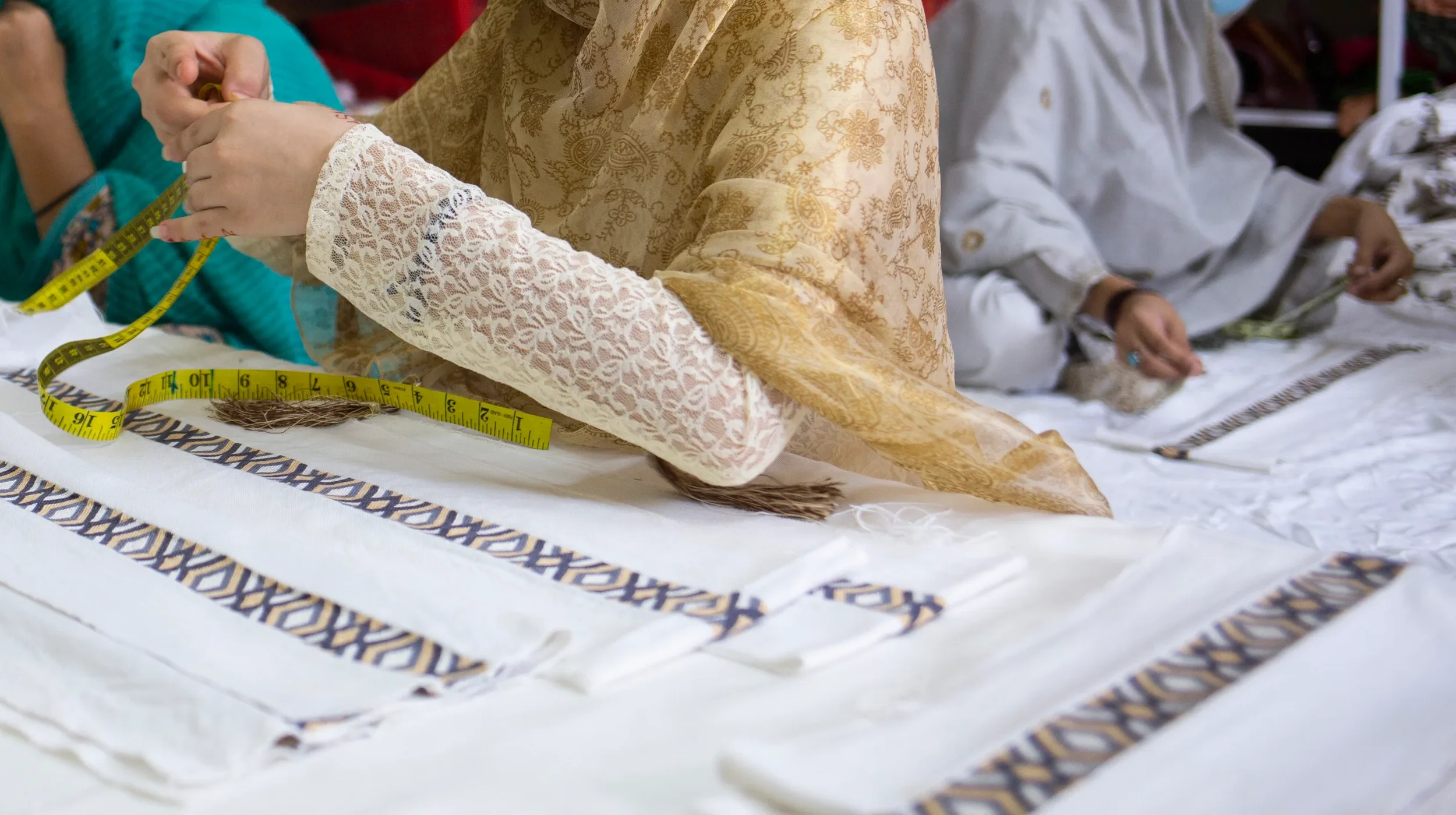
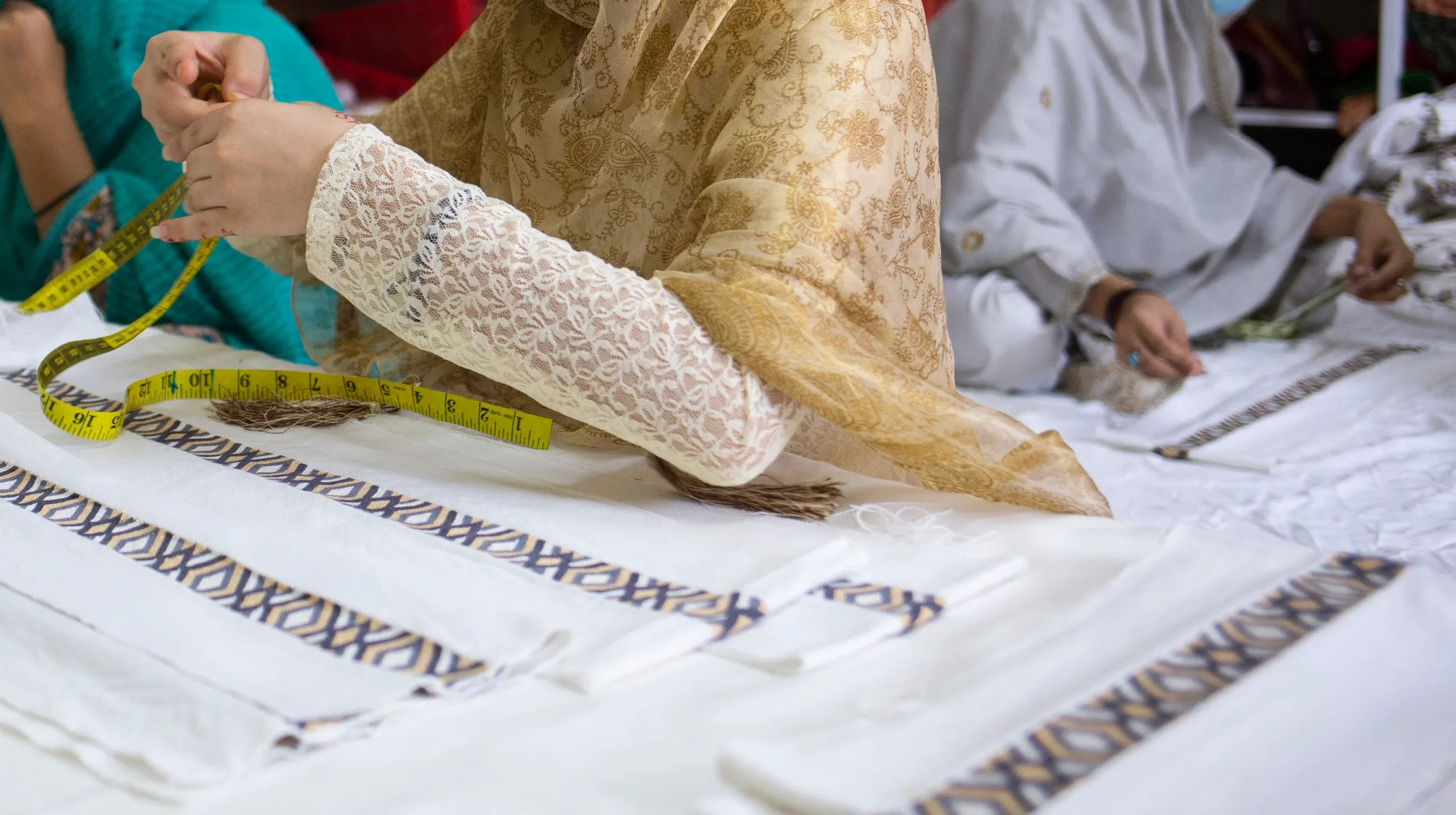
All our products are handmade and hand-embroidered by female artisans. We use pure Linen and Cotton base fabrics and pure cotton embroidery thread. Basic tools like embroidery frames, needles, finger caps and measuring tape are used for production. We recycle our waste fabric by producing small products like key chains, bookmarks and some ornaments. We use recyclable packaging materials. Our production practices are environmentally friendly.
FairTrade
Creating Opportunities for Economically Disadvantaged Producers. Poverty reduction through trade forms a key part of the WFTO’s aims
Artisan Links is the only Guaranteed Member of WFTO in Pakistan. 10 Principles of Fair Trade are adapted by Artisan Links as its core foundation principles.
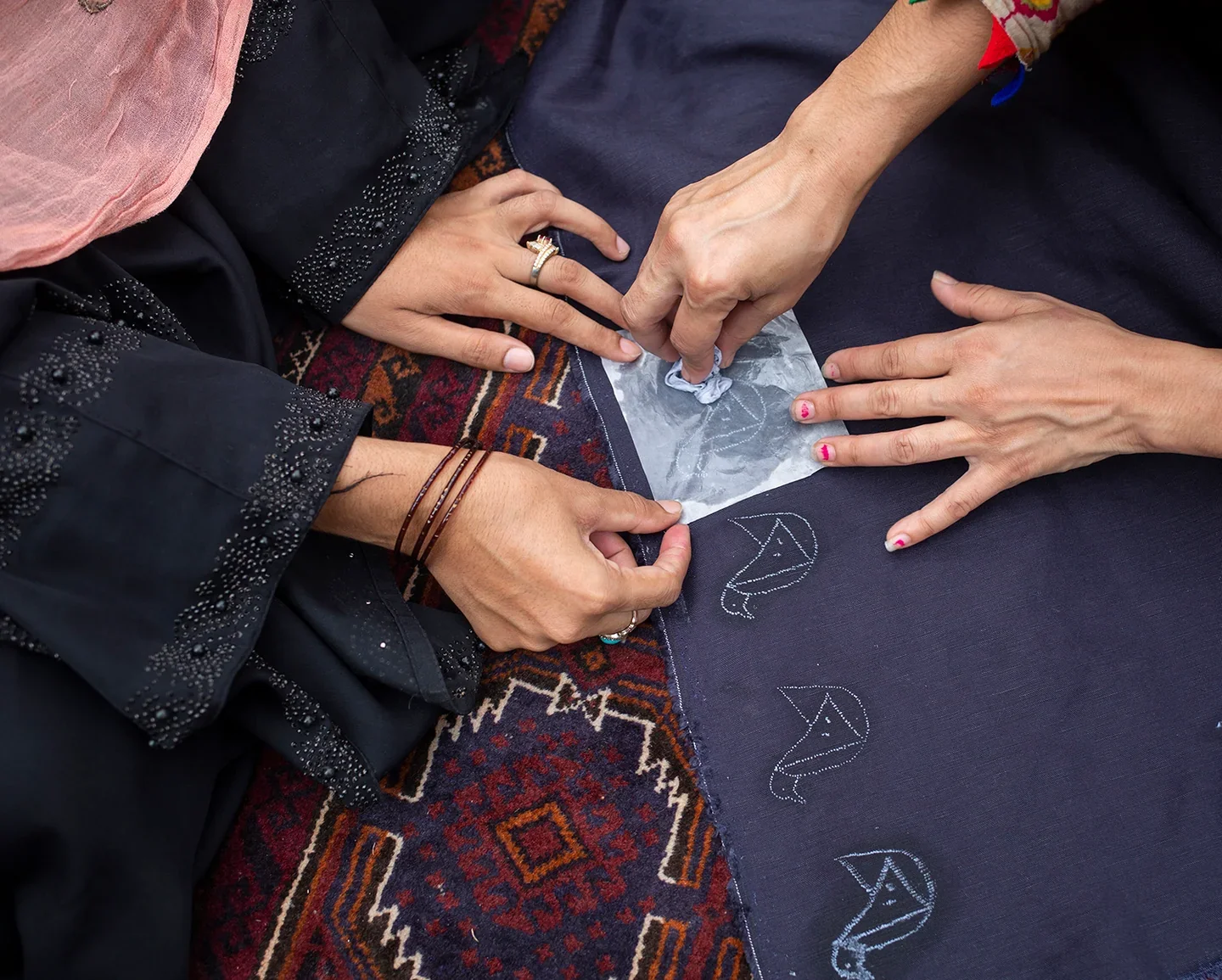
Reviving & Preserving the age-old heritage of hand embroidery. Hand embroidery for ages has been a source of bringing happiness, positivity and creativity to the core of our existence.
Embroidery Techniques
Tarshumar
This technique, also known as Hazara embroidery, first originated from central Afghanistan. ‘Tar’ means thread, and ‘shumar’ means counting – this embroidery technique is very fine and precise. It is known to be a work of art, embroidered on materials such as silk and cotton. The designs are usually based on rectangles and are multi-colored. They are worked in silk thread on a cotton ground, using a brick stitch or short satin stitches, with dividing lines worked in black and white, or even gold.
Kandahari
This technique, also known as Khamak (sewing), is an intricate form of embroidery from the province of Kandahar, Afghanistan. Khamak is a very delicate style of hand embroidery which makes use of a very thin needle. The designs involve geometric shapes that when combined, create beautiful motifs. Each silk stitch transforms into flowers, leaves, trees, birds, mountains and more!
PuktaDozi
‘Pukhta’ means strong and ‘dozi’ means embroidery – this technique originated in Uzbekistan until Nomadic Uzbeks took the tradition to neighbouring countries such as Turkmenistan, Tajikistan, and Afghanistan. This form of embroidery uses a type of satin stitch to produce huge embroideries which are often used to cover one wall of a guest room.
ZanjeeraDozi
‘Zanjeera’is a Dari word which means chain and ‘dozi’means embroidery. This stitch is popular amongst women from Ghazni, Afghanistan. The embroidery technique includes geometric and floral patterns which are delicately embroidered by silk and cotton thread.
OUR STORY | TIMELINE
With the same artisans, staff and vision, Artisan Links is a family. Our artisans are the heart and soul of our company. We value relationships and we are proud to say that Artisan Links has played its part in supporting marginalized women earn a steady income through embroidery production.
1985
Our journey dates back to 1985 under the umbrella of the Danish Committee for Aid to Afghan Refugees (DACAAR).
1986 - 1992
As an embroidery income generating project, DACAAR was established in Peshawar, Pakistan to assist some of the Afghan refugee women. In 1986, DACAAR began working on the Afghan border by providing emergency relief and in 1992, it started development across the border in sectors such as water supply and agriculture.
2002
In 2002, the DACAAR main office moved from Peshawar to Kabul, however, the sewing project remained in Peshawar to continue its work with the refugee women.
2006
In 2006, DACAAR Sewing Centre was registered as a local non-government and non-profit organization named Zardozi. Markets for Afghan Artisans. With its main office in Kabul, the NGO aimed to provide social and economic services to Afghan women in provinces such as Herat, Mazar-e-Sharif, Jalalabad and Kapisa.
2008
In 2008, Zardozi received donor funding to begin work with the women in these areas and linked them to local markets.
2017
In 2017, Zardozi was registered as Artisan Links.